The Zero-Impact HVAC Changeout: Dismantling Legacy Units Without Damaging Your La Grange Home
The Hidden Weight of HVAC Replacement Anxiety
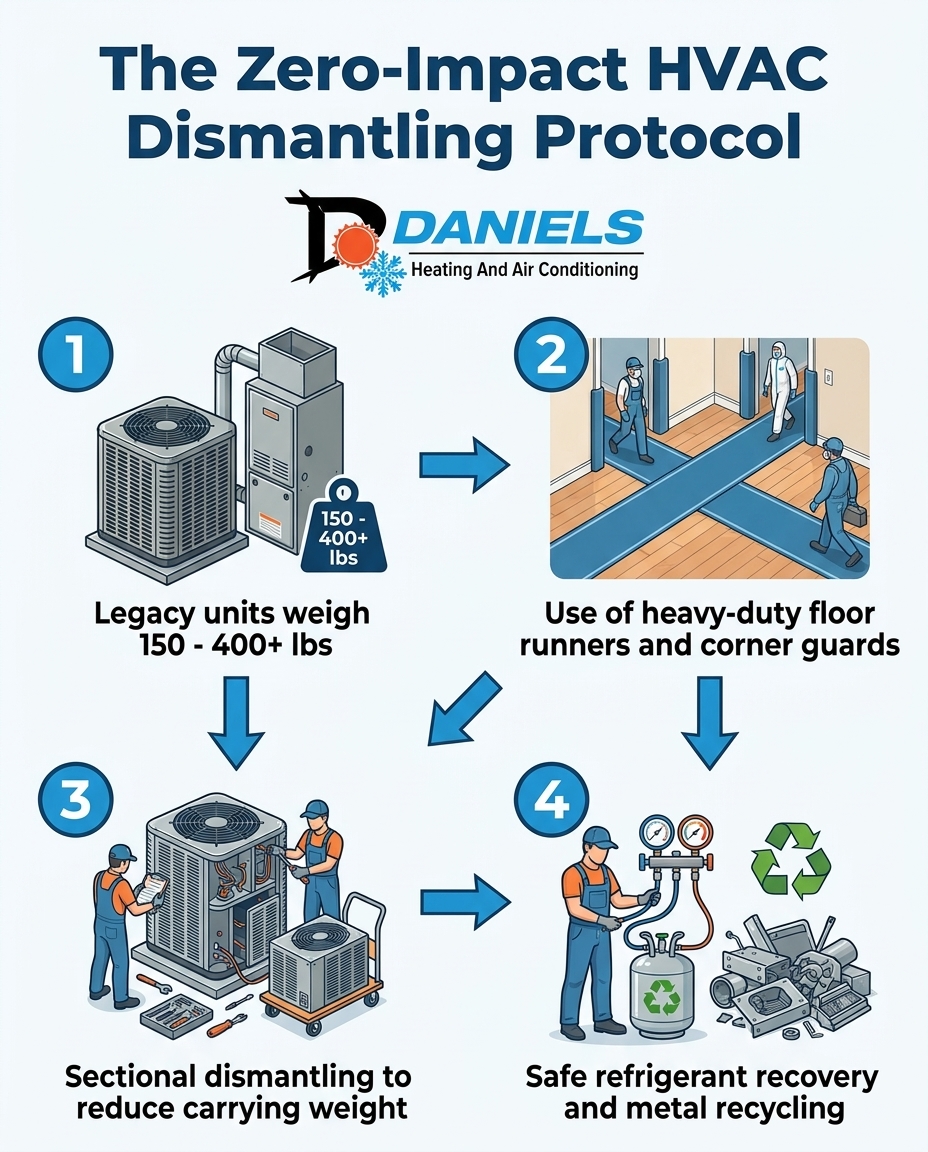
Did you know that bulky legacy HVAC units can weigh anywhere from 150 to well over 400 pounds, making The Zero-Impact HVAC Changeout: Dismantling Legacy Units Without Damaging Your La Grange Home a critical topic for local homeowners? At Daniels Heating and Air Conditioning, we regularly meet property owners who face a significant roadblock due to the sheer mass of these aging metal cabinets. You know your system is failing, yet you delay the necessary upgrade simply because you are terrified of the extraction process. The concrete problem we see locally is clear: you desperately want a modern, reliable climate control system, but you refuse to sacrifice your pristine original hardwood floors, freshly painted drywall, or carefully manicured landscaping to get it.
This anxiety is entirely justified. In our experience, the physical removal of a massive, rusted air handler or furnace is often the most dangerous phase of any home improvement project. A single slip by an unprepared technician can result in costly structural or cosmetic damage. When you reach the decision point of selecting a contractor, you must evaluate them based on their specific dismantling and removal protocols, rather than just looking at the energy efficiency ratings of the new equipment they plan to install. If a company cannot explain exactly how they intend to get the old unit out of your house safely, they are not the right fit for the job.
The conversion standard: For comprehensive property protection from start to finish, our professional HVAC services encompass the entire lifecycle of your system, ensuring a safe, methodical extraction before the new installation even begins.
To understand why this phase requires such intense focus, our technicians always point to the physical realities of the equipment sitting in your home right now. Bulky legacy HVAC units were built in an era when heavy-gauge steel and dense, oversized internal components were the industry standard. Getting them into the house decades ago was hard enough; getting them out after years of rust, settling, and structural modifications requires a masterclass in logistics.
Why Bulky Legacy Systems Pose a Threat to Older Homes
In our years of serving the Goldsboro and La Grange areas, our team has found that older homes offer incredible architectural charm, featuring unique layouts, custom woodwork, and historical character that modern subdivisions simply cannot replicate. However, these beautiful older homes were not designed to accommodate the removal of massive, outdated appliances. The physical dimensions and heavy, cumbersome nature of outdated furnaces and air handlers create a direct conflict with the tight architectural footprints common in historic neighborhoods.
When we contrast the sprawling, open-concept designs of contemporary construction with the narrow, segmented layouts of homes built before the 1980s, the risk factors skyrocket. Moving heavy machinery through tight corridors is a complex puzzle. Without a strategic approach, a heating replacement can quickly turn into a messy, destructive ordeal.
The 400-Pound Problem in Tight Spaces
According to historical data from ASHRAE and the National Association of Home Builders (NAHB), legacy systems carry a massive footprint. An outdated furnace or air handler is essentially a 400-pound steel box filled with dense copper coils and heavy blower motors. We constantly remind homeowners that gravity and awkward weight distribution make moving these units intact incredibly dangerous for the surrounding property.
Common risks of intact removal include:
• Center of gravity shifts: As technicians navigate stairs or corners, the weight inside the cabinet can shift, causing sudden drops.
• Sharp metal edges: Exposed screws, rusted corners, and jagged sheet metal can easily slice through drywall and wallpaper.
• Fluid leaks: Old units often harbor trapped condensation, oil, or sludge that can spill onto carpets and porous flooring during transit.
Historic Dimensions vs. Modern Appliances
The mismatch between 20th-century doorway widths and bulky legacy unit frames is a primary cause of property damage during rushed changeouts. Many older interior doors measure significantly narrower than modern standards, leaving zero margin for error when navigating a wide furnace chassis through the frame.
Brute force is never a viable option for our professional technicians. Trying to squeeze a 30-inch cabinet through a 28-inch door frame by pushing harder only results in splintered wood and cracked plaster. The solution requires a fundamental shift in how the equipment is handled, moving away from whole-unit extraction toward a much safer, localized dismantling process.
• Narrow Hallways — Legacy Extraction Risk: Deep drywall gouges from wide metal chassis — Professional Solution: Sectional dismantling of the unit in place
• Original Hardwoods — Legacy Extraction Risk: Irreversible gouges from heavy dragging — Professional Solution: Heavy-duty floor runners and weight distribution
• Tight Doorways — Legacy Extraction Risk: Damaged antique trim and door frames — Professional Solution: Strategic angle navigation and corner guards
The Zero-Impact Protocol: Property Protection First
To combat these architectural challenges, our team at Daniels Heating and Air Conditioning utilizes a strict 'zero-impact' regional protocol. This is a structured, non-negotiable set of property protection measures designed specifically for older homes in our area. We understand that your home is your most valuable asset, and preserving its historical integrity and cosmetic beauty is just as important as restoring your indoor comfort.
Just recently, our team helped a local homeowner who reached out when their AC unit needed repair. One of our technicians responded with same-day service and repaired the unit quickly, resolving the issue in less than 10 minutes. While our diagnostic repairs are incredibly fast and highly efficient, our extraction process deliberately slows down to prioritize safety. We trade speed for precision, ensuring that the removal of bulky legacy HVAC units leaves absolutely no trace behind.
Advanced Floor and Wall Shielding
Before a single tool touches your old equipment, the physical protection phase begins. Our technicians map out the safest extraction route from the utility room, attic, or basement all the way to the driveway. This pathway is then fortified to absorb shock and prevent friction.
• Heavy-duty floor runners: Thick, slip-resistant neoprene mats are rolled out over hardwood, tile, and carpet to distribute weight and catch any stray debris or dust.
• Protective corner guards: High-impact padding is secured around sharp hallway turns and door frames to shield fragile trim from accidental bumps.
• Strict pathway clearing: The designated route is cleared of rugs, small furniture, and decor to provide technicians with an unobstructed, safe walking path.
Sectional Dismantling Methodology
The core of our zero-impact protocol is the sectional dismantling methodology. Rather than risking damage by attempting to wrestle a massive, 400-pound steel cabinet through your home, our professionals safely break down the heavy chassis and internal components in place. Please note: This involves handling high-voltage wiring, sharp sheet metal, and pressurized refrigerants, meaning it must only be performed by licensed professionals. There are no safe DIY workarounds for dismantling an HVAC system.
By removing the blower motor, the heavy coil, and the outer casing piece by piece, our technicians drastically reduce the carrying weight of each load. This methodical breakdown eliminates the risk of wall gouges, prevents back injuries, and delivers immense psychological relief to homeowners who cherish their property.
Navigating Architectural Challenges in La Grange
When working within the local area, our contractors must be intimately familiar with the specific structural nuances of the region. We regularly see older homes in La Grange featuring mid-century ranch layouts, historic two-story designs, and custom additions that create unique logistical hurdles. Preserving the historical integrity and property value of these homes requires specialized care that goes far beyond basic heavy lifting.
A proactive approach prevents structural stress during the changeout. If a contractor tries to drag a heavy unit across an old floor joist system, the resulting vibration and weight can cause plaster ceilings below to crack. By utilizing the zero-impact protocol, our team mitigates these invisible structural risks, ensuring your home remains solid and secure. If you are noticing signs that your system is failing, running through a standard HVAC troubleshooting checklist can help you determine if it is time to plan for a careful, professional extraction.
Preserving Original Hardwoods and Fragile Trim
The building materials used in historic homes are irreplaceable. Heart pine floors, original baseboards, and hand-carved door frames are highly vulnerable to scratches, dents, and impacts. Modern synthetic flooring can sometimes bounce back from a dropped tool, but century-old wood will carry that scar forever.
Our technicians exercise extreme care around narrow staircases and original door frames. By breaking the unit down sectionally, the pieces being carried through these tight bottlenecks are small enough to be easily maneuvered by a single technician, ensuring that heavy metal never comes into contact with your fragile trim.
Attic and Crawlspace Extractions
Not all legacy systems are conveniently located in a spacious basement or utility closet. Many older homes we service in La Grange feature air handlers tucked away in sweltering attics or cramped, damp crawlspaces. These locations present the highest risk for property damage during removal.
The logistics of tight-space extraction involve:
• Drop-down attic stairs: Standard wooden attic ladders are not rated to support the weight of a technician plus a 200-pound air handler. Units must be dismantled in the attic and lowered down safely piece by piece.
• Tight crawlspace access doors: Dragging a rusted unit through the dirt and out a tiny foundation door requires specialized sliding mats to prevent tearing up the vapor barrier or damaging the foundation blocks.
• Specialized lifting gear: When necessary, our technicians utilize portable hoists and heavy-duty straps to safely lower or extract components without straining the home's framing.
Timing the Extraction: The September Fall Transition
Understanding how your home is protected is only half the battle; knowing when to schedule this work is equally vital. As we enter the September fall transition here in eastern North Carolina, our team emphasizes that the urgency of this timing cannot be overstated. During this crucial window, the relentless summer heat begins to break, but the deep winter freezes have not yet arrived. However, sudden overnight temperature drops make it essential to complete any major changeout swiftly and efficiently.
Leaving a home exposed during a messy, prolonged extraction can lead to severe indoor temperature fluctuations. If an amateur contractor takes three days to remove your old system, your home is left vulnerable to autumn rain, cold drafts, and high humidity creeping in through open ductwork or wall penetrations.
Avoiding Sudden Temperature Drops
This is where the concept of "weather-sealed changeouts" becomes paramount. Our professional team ensures that your home is never left exposed to the elements during the removal phase. By executing a planned, methodical dismantling process, the time between the old unit being removed and the new system being sealed into the ductwork is minimized.
Getting a comprehensive AC inspection in La Grange during the late summer or early fall is the perfect way to plan this transition. If our inspection reveals that your bulky legacy HVAC unit is on its last legs, you can schedule a zero-impact changeout before the overnight temperatures plummet, ensuring your family stays comfortable and your property remains protected.
Environmental Compliance: Where Does the Old Unit Go?
A common question homeowners ask us once the extraction is complete is: what happens to all that heavy, rusted metal? Addressing this concern regarding the disposal and environmental impact of legacy units is a key part of our transparent process. As a true local authority, Daniels Heating and Air Conditioning handles all compliance and disposal logistics seamlessly, so you never have to worry about an old furnace sitting on your curb.
Bulky legacy HVAC units contain a variety of materials that cannot simply be thrown into a standard dumpster. From hazardous chemical refrigerants to valuable raw metals, the disposal process is strictly regulated to protect the local environment and divert unnecessary waste from municipal landfills.
Safe Refrigerant Recovery
The most critical step in the disposal process is the safe recovery of chemical refrigerants. Older air conditioning systems and heat pumps often contain outdated refrigerants that are known ozone-depleting substances or have high global warming potential. Venting these gases into the atmosphere is illegal and environmentally disastrous.
EPA-mandated processes require that our certified professionals use specialized recovery machines and sealed vacuum tanks to extract and contain every ounce of refrigerant before the dismantling phase even begins. This ensures that the local air quality and broader environment are completely protected.
Metal Recycling and Landfill Diversion
Once the hazardous materials are secured and the unit is sectionally dismantled, the physical components are sorted for recycling. The heavy-gauge steel cabinets, aluminum fins, and dense copper coils are highly recyclable materials.
The landfill diversion process includes:
• Copper and Aluminum: Coils and lines are separated and sent to specialized metal recyclers, where they are melted down and repurposed for new manufacturing.
• Steel Chassis: The heavy outer casing of the furnace or air handler is crushed and recycled, keeping hundreds of pounds of metal out of local landfills.
• Electronic Components: Circuit boards and blower motors are processed to safely extract valuable trace metals while properly disposing of synthetic plastics.
Frequently Asked Questions About HVAC Removal
Is replacing an HVAC system messy?
It can be, but it shouldn't be if you hire the right professionals. Without proper protocols, removing an old system can release years of trapped dust, rust, and debris into your home. However, our professional team utilizes a zero-impact protocol to seal off the work area, use heavy-duty floor runners, and clean the space thoroughly, ensuring your home remains pristine throughout the process.
How do HVAC contractors protect floors during replacement?
Professional contractors use a combination of physical barriers and strategic lifting techniques to protect your flooring. We deploy thick, slip-resistant neoprene mats or heavy drop cloths along the entire walking path. Additionally, by dismantling bulky legacy HVAC units into smaller sections, our technicians prevent the need to drag heavy metal cabinets across fragile hardwood or tile.
What happens to the old HVAC unit?
Your old equipment is safely broken down, stripped of hazardous materials, and recycled. Certified technicians first recover any chemical refrigerants using EPA-compliant vacuum tanks to prevent environmental contamination. Afterward, the heavy steel casing, copper coils, and aluminum fins are sorted and transported to specialized recycling facilities, keeping the vast majority of the unit out of local landfills.
How do they remove an old furnace from an attic or crawlspace?
Removing a heavy unit from a confined space requires sectional dismantling and specialized lifting gear. Technicians will safely disconnect the power and ductwork, then break the unit down into manageable pieces right there in the attic or crawlspace. These smaller, lighter sections are then carefully lowered down the attic stairs or passed through the crawlspace door without straining the home's framing or risking a drop.
How long does the dismantling phase of an HVAC changeout typically take?
In our experience, the dismantling and extraction phase generally takes between two to four hours, depending on the location of the unit and the complexity of the home's layout. Older homes in La Grange with tight crawlspaces or narrow historic hallways may require more time to ensure the zero-impact protocol is fully executed. This deliberate pace is a necessary investment in protecting your property from accidental damage.
Secure Your Fall Heating Transition with Confidence
Ultimately, a successful system upgrade is just as much about how the old unit leaves your home as how the new one arrives. You should never have to compromise the beauty and structural integrity of your property just to achieve reliable indoor comfort. By prioritizing our methodical, zero-impact dismantling process, you can rest easy knowing that your historic or older home will be treated with the utmost respect.
With the September fall transition rapidly approaching, now is the ideal time to address your aging system before the demanding winter weather sets in. Don't let the fear of a messy extraction keep you tied to a failing, inefficient furnace. For a seamless, property-safe upgrade, reach out to your La Grange HVAC professionals at Daniels Heating and Air Conditioning today to schedule a consultation and secure your home's comfort with complete confidence.
hear what our satisfied
clients have to say


Service areas