
Preparing Newton Grove Heat Pumps for November Defrost Cycles
Waking Up to a Frosty Heat Pump in Eastern North Carolina
Late fall in Eastern North Carolina brings a distinct, biting chill, and preparing Newton Grove heat pumps for November defrost cycles is an essential step before the deeper winter weather arrives. In our years of keeping local homes comfortable, the team at Daniels Heating and Air Conditioning has seen the transition from mild October afternoons to freezing November nights catch countless homeowners off guard. You might step outside with your morning coffee only to discover your outdoor HVAC unit covered in a layer of white frost or light ice. It is completely understandable to feel a sudden jolt of panic when you see this. Your immediate thought is likely that the system has broken down right as the cold season and holiday preparations begin.
Need immediate assistance? Explore our professional Heating Services to keep your home comfortable all season long.
However, as our technicians often explain during late fall service calls, that early morning frost is often an expected reaction to specific weather conditions, not necessarily a mechanical failure. Heat pumps are designed to operate outdoors in freezing temperatures, and part of that design includes an automated response to manage ice buildup. The core decision you face as a homeowner is determining if the system's automated defrosting response is functioning correctly, or if the ice accumulation is a sign that professional intervention is required. Recognizing the difference between normal physics and a struggling system early in the season prevents minor issues from turning into mid-winter emergencies.
Understanding the Physics Behind Your Heat Pump's Defrost Cycle
To understand why your outdoor unit occasionally looks like a block of ice, it helps to know how the equipment actually moves heat. A defrost cycle is simply a temporary reversal of the system's operation designed to melt accumulated ice on the outdoor coil. When your heat pump is heating your home, it extracts ambient heat from the outside air and transfers it indoors. During this process, the outdoor coil gets extremely cold—often colder than the outside air itself. Moisture in the air freezes onto this cold surface. When the system detects too much ice, it initiates a defrost cycle to clear the coils.
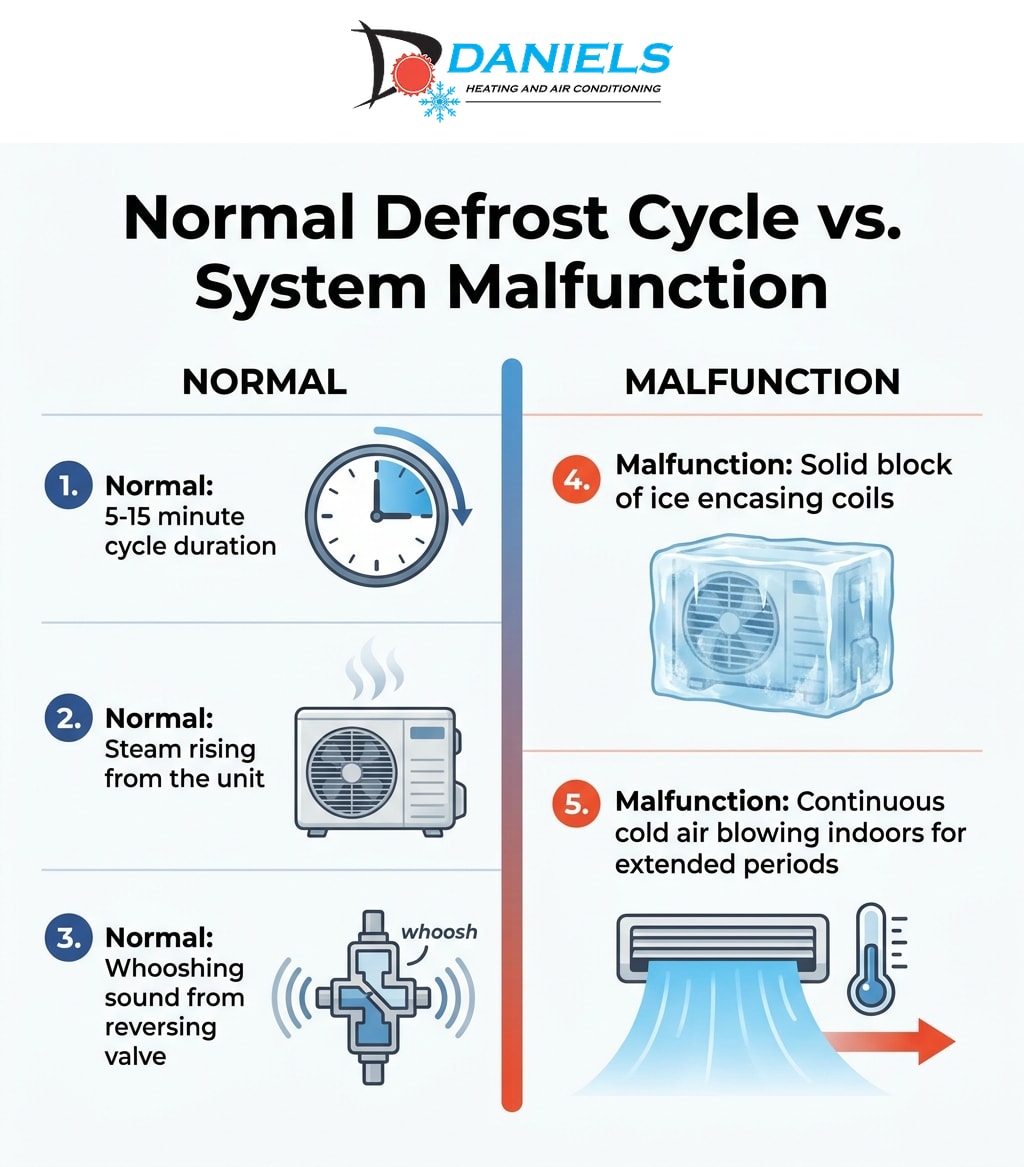
This automated process relies on specialized sensors attached to the outdoor coil. When these sensors read temperatures that are too low for too long, they signal the defrost control board to take action. A typical defrost cycle duration lasts anywhere from 5 to 15 minutes, depending on how much ice has formed and the outside temperature. Once the sensors detect that the coil is warm enough and the ice has melted, the system seamlessly returns to its normal heating mode.
If you want to learn more about how these highly efficient systems operate year-round, you can read about modern Heat Pump Systems and their advanced features.
The Temporary Shift to Cooling Mode
When the defrost cycle triggers, your system actually performs a fascinating mechanical trick to protect itself.
1. The reversing valve shifts: You will often hear a distinct "whoosh" sound as the reversing valve changes direction. This redirects hot refrigerant from inside your home back out to the outdoor coil, turning the outdoor unit into a temporary heater to melt the ice.
2. The outdoor fan shuts off: The large fan on top of the outdoor unit stops spinning. This prevents cold outside air from blowing across the coil, allowing the hot refrigerant to melt the ice much faster.
3. Backup heat engages: Because the system is temporarily sending heat outside, it would normally blow cold air into your home. To prevent this uncomfortable draft, the system automatically turns on your indoor auxiliary or backup heating elements to keep you warm until the cycle finishes.
How High Humidity and Temperature Drops Create Rapid Frost
The specific climate of Eastern North Carolina plays a massive role in how often your system needs to defrost. In late fall, our region experiences a unique combination of high overnight humidity and near-freezing surface temperatures. This creates the perfect environment for rapid frost development. If you live in Goldsboro, Mt. Olive, Pikeville, Dudley, or Princeton, your home sits in a microclimate that frequently sees heavy morning dew and dropping temperatures just before dawn.
Our service technicians see a predictable pattern every November: a sudden influx of concerned calls about frosted heat pumps tied directly to the dew point. The dew point is the temperature at which air can no longer hold all of its water vapor, forcing the moisture to condense into liquid. When the outdoor temperature drops to the dew point, and that temperature is near or below freezing, the condensation immediately turns to frost on any cold surface. Because your heat pump's outdoor coil is actively chilling itself to absorb heat, it becomes a magnet for this freezing moisture.
During a November early morning frost event, your system might need to enter defrost mode more frequently than it would on a dry, freezing day. This is a sign that your equipment is actively adapting to the heavy moisture in the air. In our highly humid regional climate, frequent defrosting during wet, cold mornings is an expected operational baseline, whereas the same behavior in a dry, arid climate might signal a problem.
Normal Defrosting vs. System Malfunction: A Visual Checklist
Based on our extensive field experience, knowing what to look and listen for can save you from unnecessary worry and help you identify a real problem before it damages your equipment. You can visually and auditorily diagnose your unit's behavior from a safe distance. Never attempt to chip away ice manually with tools, as you can easily puncture the delicate refrigerant coils and cause catastrophic damage.
Normal Sounds and Sights
• Steam rising from the unit: As the hot refrigerant melts the frost, you will see a plume of white vapor rising from the top of the unit. Homeowners often mistake this for smoke, but it is simply steam evaporating into the cold morning air.
• The whoosh of the reversing valve: A loud swoosh or hissing sound at the beginning and end of the cycle is the reversing valve shifting the flow of refrigerant.
• A resting fan: The outdoor fan blade will completely stop spinning while the compressor continues to hum quietly.
Red Flags to Watch For
• Ice bridging between the coils: A light coating of white frost is normal, but if you see thick, solid ice bridging the gaps between the metal fins or encasing the entire unit like a glacier, the system is malfunctioning.
• Loud grinding noises: If you hear a harsh, metallic grinding or slapping sound, the fan blades may be hitting a thick wall of built-up ice.
• Persistent cold air indoors: If the cycle lasts longer than the typical defrost cycle duration of 15 minutes, or if your vents blow continuously cold air for extended periods, the backup heating elements or the defrost board may have failed.
• Ice Appearance — Normal Defrost Cycle: Light, uniform white frost on the outer coils. — System Malfunction: Thick, solid blocks of ice encasing the unit and pipes.
• Vapor — Normal Defrost Cycle: White steam rising from the top of the unit as ice melts. — System Malfunction: Dark smoke or a burning electrical smell (turn off immediately).
• Cycle Duration — Normal Defrost Cycle: Resolves completely within 5 to 15 minutes. — System Malfunction: System runs continuously for hours without melting the ice.
• Indoor Air — Normal Defrost Cycle: Warm or room-temperature air blowing from vents. — System Malfunction: Persistent, uncomfortable cold air blowing into the house.
When to Worry: Signs Your Heat Pump Needs Immediate Attention
While a light frost is no cause for alarm, a heat pump that fails to defrost itself is a serious issue that requires prompt action. Allowing a system to run continuously with a frozen coil places immense strain on the compressor. The compressor is the heart of your HVAC system, and if it tries to pump refrigerant through a coil that is completely blocked by ice, it can overheat or suffer from liquid slugging—a condition where liquid refrigerant flows backward and destroys the internal valves.
Beyond the risk of catastrophic compressor failure, a frozen heat pump is incredibly inefficient. Your system will struggle to pull any heat from the outside air, forcing your expensive indoor backup heat strips to run non-stop. This leads to extreme energy bills that can shock you at the end of the month.
If you notice the red flags mentioned above, the safest course of action is to turn the system off at the thermostat or switch it manually to "Emergency Heat" mode. This shuts down the outdoor unit entirely and relies solely on your indoor electric strips to keep the house warm while you wait for a technician. Diagnosing a failed defrost cycle requires testing high-voltage electrical components and handling pressurized chemicals. These specific electrical and refrigerant issues require licensed expertise to resolve safely. For more guidance on handling sudden equipment failures safely, review our guide on Immediate Troubleshooting & First Aid for Common HVAC Emergencies.
The Importance of Expert Diagnostics Before Deep Winter
Guessing at the cause of a frozen outdoor unit can lead to costly misdiagnoses and repeated breakdowns. A heat pump that won't defrost could be suffering from a wide variety of hidden issues. It might be a faulty defrost control board, a bad temperature thermistor, low refrigerant levels causing the coil to freeze too rapidly, or even a failing outdoor fan motor that isn't moving enough air.
This is why professional intervention is so important. When a licensed technician arrives for a diagnostic visit, they do much more than just look at the ice. They use specialized multimeters to test the resistance of the sensors, verify the low-voltage signals coming from the control board, and check the refrigerant charge to ensure there are no slow leaks. At Daniels Heating and Air Conditioning, we provide expert local diagnostics to accurately distinguish between normal defrosting behavior and genuine mechanical issues. Our technicians understand exactly how Eastern North Carolina's weather patterns impact specific equipment brands and models, and we recommend professional diagnostics because we frequently see minor issues snowball into major breakdowns when left unchecked.
Addressing minor sensor issues or slightly low refrigerant levels in November is far easier and less stressful than waiting until January. If you are in our extended service footprint, you can rely on our Newton Grove HVAC Services to ensure your system is thoroughly tested and ready for the harsh winter months ahead.
Securing Reliability with Bi-Annual Maintenance
The absolute best way to handle a frozen heat pump is to prevent it from freezing unnaturally in the first place. Routine seasonal checks of the defrost control board, reversing valve, and refrigerant levels ensure that the automated systems are fully functional before the cold weather arrives. When a technician cleans the outdoor coil during a tune-up, they remove dirt, leaves, and debris that can trap moisture and accelerate ice buildup.
A structured, bi-annual maintenance agreement provides immense benefits for long-term system health. It ensures that comprehensive check-ups are performed on schedule, allowing professionals to inspect all the hidden components that homeowners rarely see. For example, our technicians recently visited one local customer who required routine bi-annual system check-ups under a maintenance agreement earlier this spring. Our team performed the scheduled check-up, went under the house to inspect the hidden ductwork and air handler, and explained everything clearly. Because that system received regular professional maintenance, it was perfectly calibrated and ready to handle the sudden transition into late fall weather without any operational hiccups. Maintaining an efficient system can also help you take advantage of general utility incentive programs or federal tax credits for energy efficiency—check with your tax professional or local utility for current details.
Proactive care shifts your approach from reactive panic to confident preparation. Framing maintenance as an investment in uninterrupted comfort means you never have to second-guess the strange noises or sights coming from your equipment. To keep your system in top shape year-round, consider enrolling in a comprehensive HVAC Maintenance Plan.
Enjoy Peace of Mind This November
Understanding the visual and auditory cues of a defrost cycle empowers you to take control of your home comfort. As you prep your home for the upcoming holiday season, knowing that seeing a little steam and hearing a brief whooshing sound is a sign of a healthy, adapting system allows you to enjoy your early mornings without anxiety. Preparing Newton Grove heat pumps for November defrost cycles is all about observation and timely action.
Remember the simple rule of thumb: brief cycles with light frost and steam are completely normal, while a solid block of ice that refuses to melt requires a professional touch. If you are ever unsure about your system's performance, do not wait for the deep winter freezes to find out if it is working. Schedule a comprehensive inspection today to secure your peace of mind.
Frequently Asked Questions
How long does a heat pump defrost cycle last?
A normal defrost cycle typically lasts between 5 to 15 minutes. The exact duration depends on the outside temperature, the humidity levels, and how much frost has accumulated on the outdoor coil. Once the internal sensors detect that the coil is warm enough and the ice has melted, the system will automatically return to its standard heating mode.
Why is there steam coming from my heat pump?
Steam rising from your outdoor unit is a completely normal byproduct of the defrost cycle. When the system sends hot refrigerant to the outdoor coil to melt the accumulated frost, the rapid temperature change causes the melting ice to evaporate quickly. This vapor is often mistaken for smoke, but it is just harmless steam dissipating into the cold air.
When should I worry about ice on my heat pump?
You should be concerned if the frost turns into a thick, solid block of ice that encases the metal fins and internal components. If the unit runs continuously without melting the ice, or if it makes loud grinding noises, the defrost mechanism has likely failed. In these cases, switch your thermostat to emergency heat and call a professional.
Is it normal for a heat pump to blow cold air in defrost mode?
It is normal for the heat pump itself to produce cooler air during defrost, but your indoor vents should not blow freezing air. Modern systems automatically engage indoor auxiliary heat strips during the defrost cycle to counteract the cooling effect. If you feel persistent cold air coming from your vents for more than 15 minutes, your backup heat strips may be malfunctioning.
How often should a heat pump go into defrost mode during a cold snap?
During a cold snap with high humidity, a heat pump might enter defrost mode every 30 to 90 minutes of runtime. This frequency can increase significantly during freezing rain, heavy morning dew, or snowstorms. As long as the cycle completes within 15 minutes and clears the ice, frequent cycling is a sign the system is adapting to the weather.
Can high humidity cause my heat pump to freeze up faster?
Yes, high humidity is one of the primary drivers of rapid frost accumulation. When the air is saturated with moisture, that water vapor condenses and freezes almost instantly upon contacting the freezing outdoor coil. Areas with high overnight humidity will see much more frequent early-morning defrost cycles than dry, arid regions.
hear what our satisfied
clients have to say


Service areas